
- Instructor of record: Stanley Collins
- Instructor of record: Jennifer Hurley
- Other editing teacher: Gary McDonogh

- Instructor of record: Dirk Kinsey

- Instructor of record: Dirk Kinsey
- Instructor of record: Stanley Collins
- Instructor of record: Samuel Olshin
- Instructor of record: Daniela Voith
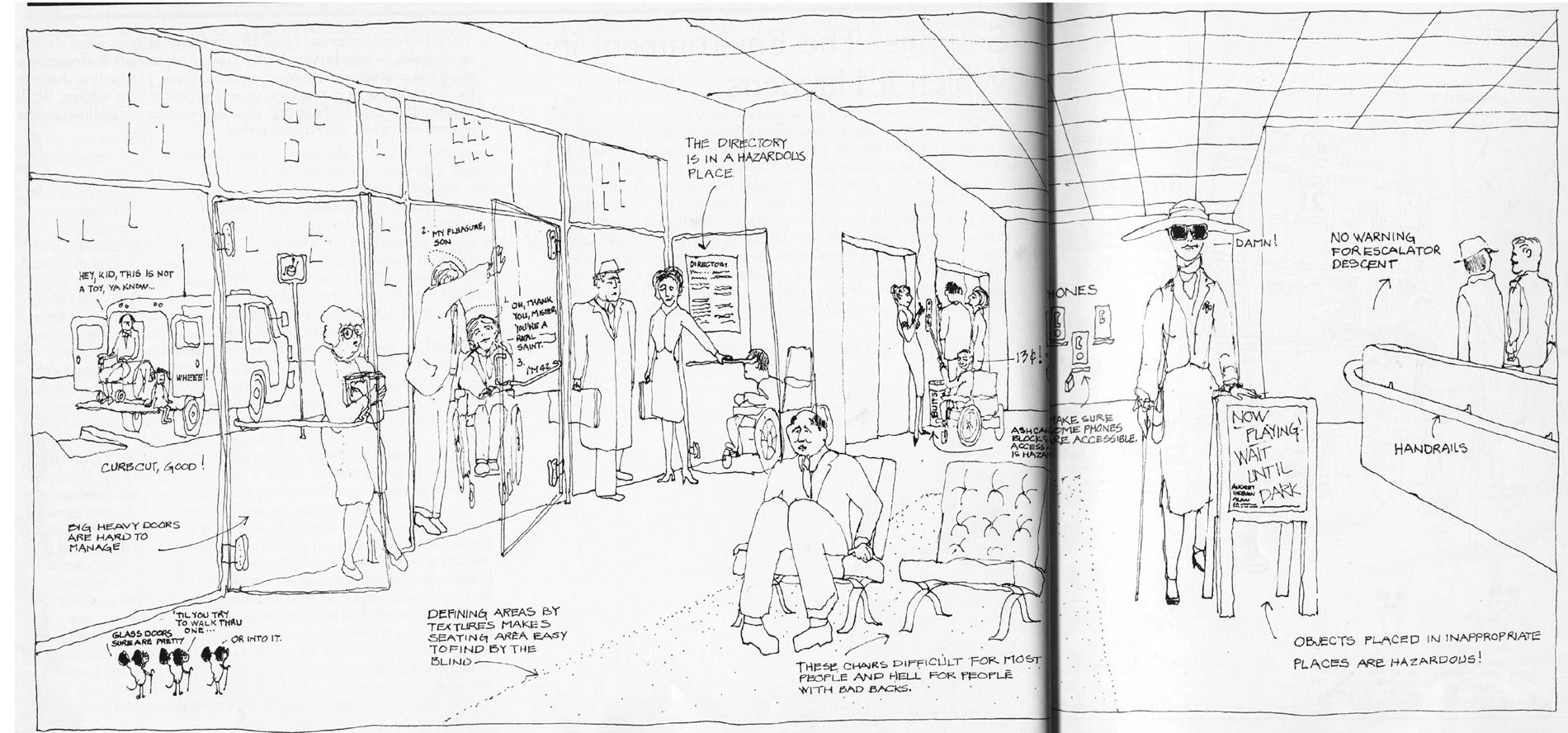
This course will explore architectural history research methods, focusing on spatial histories of healthcare, accessibility, and radical health activism. Over the course of the semester, students will develop methods of interpretation for exploring the agency of individuals and groups who have shaped spaces of health and care—including hospitals, clinics, homes, community centers, landscapes, and activist spaces—as well as the lives shaped by these buildings and by the notions of “health” they produce. The aim of the course is twofold. First, to cultivate feminist, disability studies, and critical race studies perspectives on the history of the built environment through the interpretation of sites of medical authority, discipline, and care. Second, to build confidence in reading urban and architectural documents—floor plans, perspective drawings, photographs, three-dimensional objects, design periodicals and product advertising, post-occupancy surveys, etc.—by connecting them with these broader historical themes. To this end, the course will be structured as a hybrid lecture and methodology workshop, with each week including interactive activities ranging from collective architectural drawing interpretation and annotation to site visits that illuminate how spatial histories of health are curated in the present.
Following two introductory weeks of reading discussion illuminating how notions of the “healthy” or “normal” body have been historically constructed in ableist, gendered, and racialized terms, this course will be organized around three modules: Designing Health, Environmentalizing Health, Reclaiming Health. Each module has its own set of questions animating historical conceptions of embodiment and well-being through the lens of architectural history and landscape studies:
PART I. DESIGNING HEALTH
How have hospitals, clinics, maternity wards, rehabilitation centers, and other spaces of care been shaped by changing ideas about health, illness, and bodily difference? How have these spaces, in turn, sorted, disciplined, segregated, or cared for bodies differently, producing racialized, gendered, and class-based hierarchies of care and shaping definitions of disability and mental illness?
PART II. ENVIRONMENTALIZING HEALTH
What if the very spaces designed to shelter and make us healthy can also make us sick? How have the materials and infrastructures of the built environment—from lead and toxic adhesives to petroleum-derived plastics and polluted landscapes—exposed different bodies and communities to different forms and degrees of risk? Who gets to decide which risks are acceptable, and whose bodies are considered expendable?
PART III. RECLAIMING HEALTH
What would health look like if communities, rather than hierarchical institutions, were given the power to define and produce it? How have Black and Latine activists, disabled and neurodivergent people, LGBTQ+ communities, women, and other marginalized communities challenged institutional models of care and created alternative spaces rooted in autonomy, mutual aid, and collective power?
Over the course of the semester, we will explore these questions by placing our own, embodied experiences of the built environment in conversation with scholarly texts historicizing the transformation of health spaces and infrastructures. We will also center our own embodied experiences, needs, and constraints as we visit key sites, including the Pennsylvania Hospital Museum in Philadelphia.
Following two introductory weeks of reading discussion illuminating how notions of the “healthy” or “normal” body have been historically constructed in ableist, gendered, and racialized terms, this course will be organized around three modules: Designing Health, Environmentalizing Health, Reclaiming Health. Each module has its own set of questions animating historical conceptions of embodiment and well-being through the lens of architectural history and landscape studies:
PART I. DESIGNING HEALTH
How have hospitals, clinics, maternity wards, rehabilitation centers, and other spaces of care been shaped by changing ideas about health, illness, and bodily difference? How have these spaces, in turn, sorted, disciplined, segregated, or cared for bodies differently, producing racialized, gendered, and class-based hierarchies of care and shaping definitions of disability and mental illness?
PART II. ENVIRONMENTALIZING HEALTH
What if the very spaces designed to shelter and make us healthy can also make us sick? How have the materials and infrastructures of the built environment—from lead and toxic adhesives to petroleum-derived plastics and polluted landscapes—exposed different bodies and communities to different forms and degrees of risk? Who gets to decide which risks are acceptable, and whose bodies are considered expendable?
PART III. RECLAIMING HEALTH
What would health look like if communities, rather than hierarchical institutions, were given the power to define and produce it? How have Black and Latine activists, disabled and neurodivergent people, LGBTQ+ communities, women, and other marginalized communities challenged institutional models of care and created alternative spaces rooted in autonomy, mutual aid, and collective power?
Over the course of the semester, we will explore these questions by placing our own, embodied experiences of the built environment in conversation with scholarly texts historicizing the transformation of health spaces and infrastructures. We will also center our own embodied experiences, needs, and constraints as we visit key sites, including the Pennsylvania Hospital Museum in Philadelphia.
- Instructor of record: M.C. Overholt
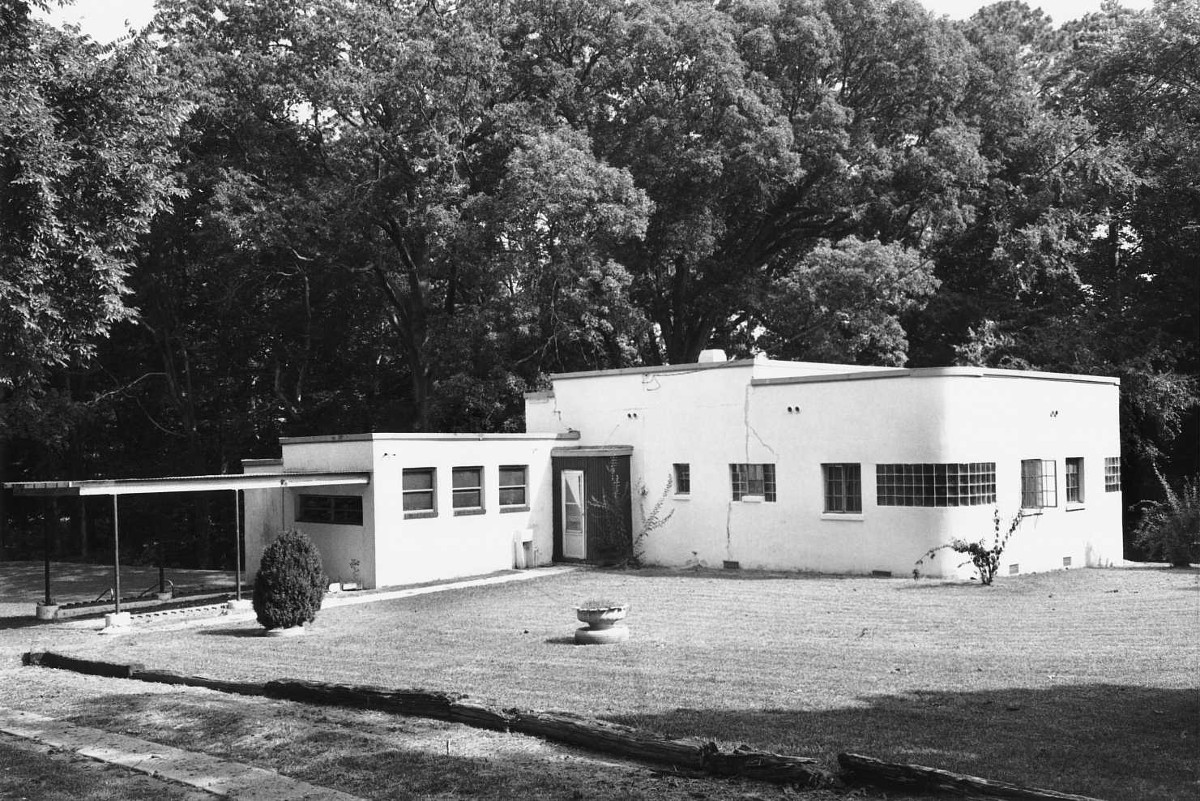
This survey introduces students to a broad range of architectural practices from the twentieth century, tracing the emergence of the avant-garde in the 1910s and 1920s through the diverse architectural movements, political projects, and social transformations that culminated in postmodernism. Rather than treating modern architecture as a linear history of formal innovation, we will situate architectural production within the major geopolitical and social transformations of the period, including the World Wars and Cold War, decolonization and the formation of new nation-states, and global countercultures and social movements. Along the way, we will consider the architectural implications of Black radicalism, feminism, queer liberation, disability justice, environmentalism, and renewed interest in vernacular and popular cultures. Following a global approach, the course asks how these histories might complicate conventional narratives of modernism and its aftermath. This course follows the content of CITY 253, which focuses on eighteenth- and nineteenth-century global architecture, but CITY 253 is not a prerequisite.
- Instructor of record: M.C. Overholt
- Instructor of record: Jeffrey Cohen
- Other editing teacher: Liv Raddatz
- Instructor of record: Dirk Kinsey
- Instructor of record: Gary McDonogh
- Instructor of record: Stanley Collins
- Instructor of record: Jennifer Hurley
- Instructor of record: Gary McDonogh
- Instructor of record: Gary McDonogh
- Instructor of record: Min Kyung Lee
- Instructor of record: Dirk Kinsey
- Instructor of record: Samuel Olshin
- Instructor of record: Gary McDonogh