
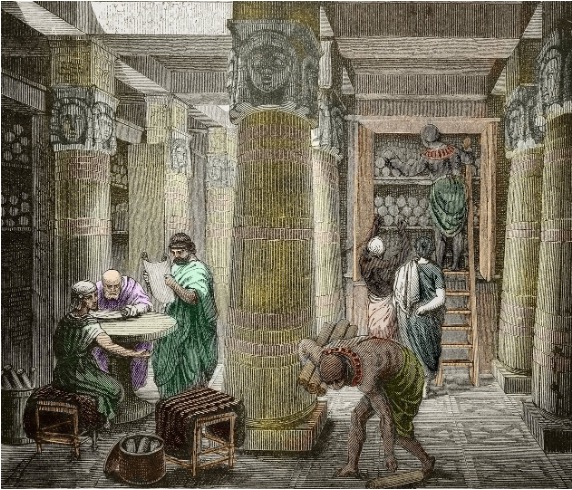
Everything we know about the ancient world comes to us from what survived. But survival is rarely an accident. It depends upon writers, archivists, emperors, and ordinary people to write down and preserve what would otherwise be lost. Who were these people? How did they develop writing and book technology? How did developments in media and knowledge preservation alter the ways we think? Pursuing these questions will take our class back to the dawn of writing and libraries. Taking stock of what remains, we shall examine the systems by which the ancient world—particularly the Greeks and Romans—organized, transmitted, and preserved knowledge, with particular attention to writing practices, archives, and book culture. Along the way, we shall situate the ancient Mediterranean within a broader global context by considering earlier archival traditions in Mesopotamia and Egypt, as well as comparative perspectives in Ancient China and Heian Japan. Readings will come from ancient poets and philosophers; medieval monks and Renaissance printers; and secondary scholarship on archive theory as well as the history of the book. We will investigate how antiquity survived by tracing its excavation, interpretation, and preservation in printing presses, libraries, and museums. This hands-on writing seminar makes ample use of local resources, including the Rare Books & Manuscripts Collections housed at Bryn Mawr and the Penn Museum.
- Instructor of record, Other editing teacher: Martin Michalek
Instruction Mode: In Person
Class Meeting Dates and Times: Tu./Th. 11:40 - 13:00