Section outline

  • ESEM Section 001: Sense and Nonsense

    Mon/Wed 1:10 - 2:30 p.m.
    Dalton 212A

    Dr. Jen Callaghan (jcallaghan@brynmawr.edu)
    Office hours: By appointment Mon-Thurs (in person) or Fri (Zoom)
    • What is nonsense?
    • Who am I as a writer? Who are my classmates and instructor? What are my own goals for this course?
        • In class:

          Introduction to the course. What is nonsense?

        • Denotation = the literal or primary meaning of a word

          Connotation = a positive, negative, or neutral feeling or association with the word

          Discuss different definitions of “nonsense” with your group and come up with a dictionary definition of the word. What does the word mean? How have you heard the term used? In which contexts? Was the connotation positive, negative, or neutral?

        • Definition of nonsense developed in class by us:

          1) illogical, paradoxical, logically unsound; lacks reason

          2) something with no clear purpose or meaning; indecipherable, unexplainable

          3)  seemingly incoherent thoughts, concepts, ideas, objects or art, language, or behavior that you can’t interpret because you lack context or ability, due to cultural bias, or because they’re new or strange

          4) phenomena that break laws of physics or nature, literally (but not metaphorically) impossible

          5) language or behavior that defies convention, societal norms or expectations, bizarre or confusing

          6) Something you don’t agree with...something you think is wrong. A dismissive, derogatory label put onto something by a defensive or close-minded person (resistance to nonsense = closemindedness)

          7) Something whimsical, humorous, silly, fun

          7a) potentially to the point of being distracting or numbing 

          8) not substantial, serious, or productive 

          9) a more creative way to express sense

          10) the antithesis of sense, but not lacking meaning

        • After the first class:
        • 1) Click the link below to sign up for an individual conference time to meet with Dr. Callaghan on Thursday, Sept. 3, or Friday, Sept. 4. Conferences last 25 minutes and will be held in English House 201.
        • 2) Complete the questionnaire before your appointment.
        • Meet with me for an individual conference on Thursday or Friday in my office, English House 201. When it's time for your appointment, please knock on the door in case my previous conference is running long.

          English House is across the street from the Merion parking lot. Be careful crossing New Gulph Road. When you enter the front door of English House, go upstairs and turn left down the long, winding hallway. My office is near the end of the hall.

  • Current week
    • How do we make sense of encounters with the new or unfamiliar?
    • How do I develop a paper topic and question? What are the stakes of an argument?
        • Before class:
        • 1) Prepare for class discussion:
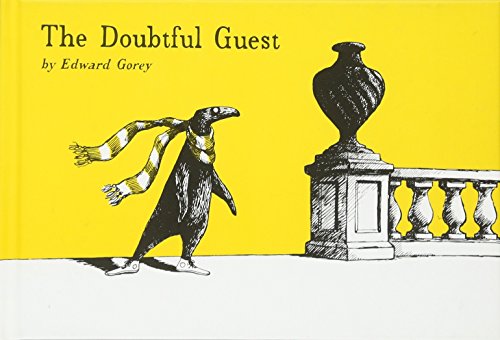
        • Read Edward Gorey's book The Doubtful Guest. Copies are for sale in the BMC bookstore.

        • In college, students read a variety of texts for different purposes. For example, reading an article or short story to discuss in class requires different strategies than reading a textbook chapter before a lecture. This handout provides tips on the kind of deep, engaged reading that will help you prepare for a seminar discussion or write a paper about a text.

        • Not sure how to join an academic conversation? This handout offers advice on preparing for and participating in class discussions.

        • Read the assignment for the short paper due on Sept. 13 (see below). Have questions about the assignment? Ask in class.
    • What can literary nonsense reveal about power relations and social norms in the real world?
    • How do I form a thesis? What makes a thesis statement "good" or "strong"?
        • Before class:
        • 1) Prepare for class discussion:
        • Read pp. 99-144 and pp. 310-319 of the Norton Critical Edition of Alice in Wonderland by Lewis Caroll, edited by Donald J. Gray. The book is available for purchase in the Bryn Mawr bookstore.

          NOTE: we are not reading Alice's Adventures in Wonderland. We're reading the sequel, Through the Looking-glass and What Alice Found There.

        • Here's a digital copy of Through the Looking-glass for those who prefer not to buy the version in the bookstore. Note that the page numbers are not the same as the Norton critical edition's and you'll still need to read the excerpts of critical articles that I assigned.

        • Skip Gubar; we're reading excerpts from Elizabeth Sewell, "The Game of Nonsense."

        • Before class:
        • 1) Prepare for class discussion:
        • Read pp. 145-75 of the Norton Critical Edition of Alice in Wonderland by Lewis Caroll, edited by Donald J. Gray. The book is available for purchase in the Bryn Mawr bookstore.

          NOTE: we are reading Through the Looking-glass and What Alice Found There, not Alice's Adventures in Wonderland.

        • 2) Read the assignment for the short paper due on Sept. 20 (see below). Have questions about the assignment? Ask in class.
    • What's the purpose of the introduction in an academic paper? What kinds of information will an American academic reader expect to find in the intro?
    • What counts as plagiarism at Bryn Mawr and how do I avoid it? How do I cite sources in MLA? What if I take a class that requires a different citation style? Why use sources in my writing anyway?