
ESEM: Migration & Modern Germany
Section outline
-

-
Please refer to this syllabus as the guiding document for our course.
286.5 KB · Uploaded 08/31/26, 17:49 -
One of the many great things about a small liberal arts school like Bryn Mawr is the ability to get to know your professors. "Office hours" are time slots that professors set aside to meet with students each week. These meetings can be to discuss a topic of interest, a question, an assignment, or to brainstorm ideas. We can also just informally chat about how other courses are going and any issues or difficulties you are having. You should take advantage of them in all of your classes!
For the ESEM, you are required to have four one-on-one meetings with me over the course of the semester. Normally, these meetings will be twenty minutes long. However, for our first meeting, it'll be a shorter 10-15 minute getting-to-know-each-other session, so there is no need to prepare anything in advance.
-
-
-
Use these steps to analyze a primary source.
122.5 KB · Uploaded 09/7/26, 14:09
-
-
-
-
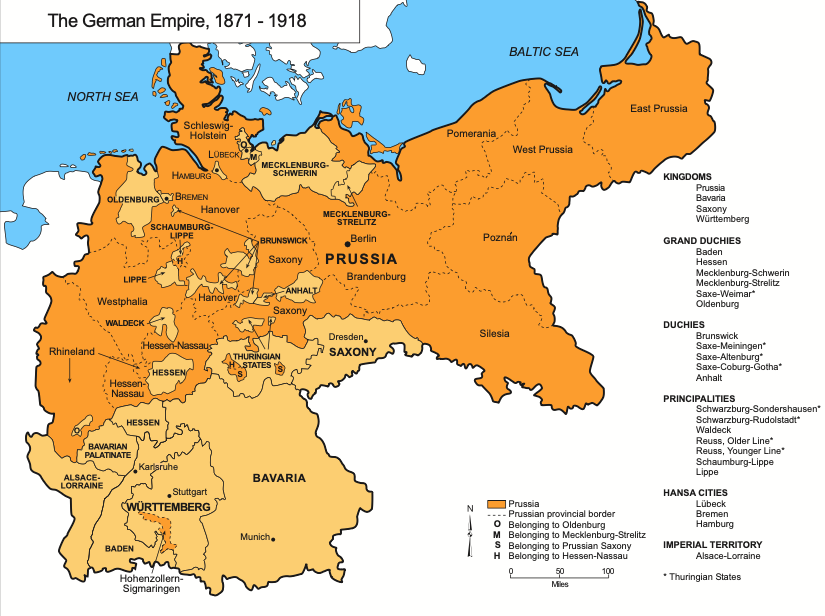
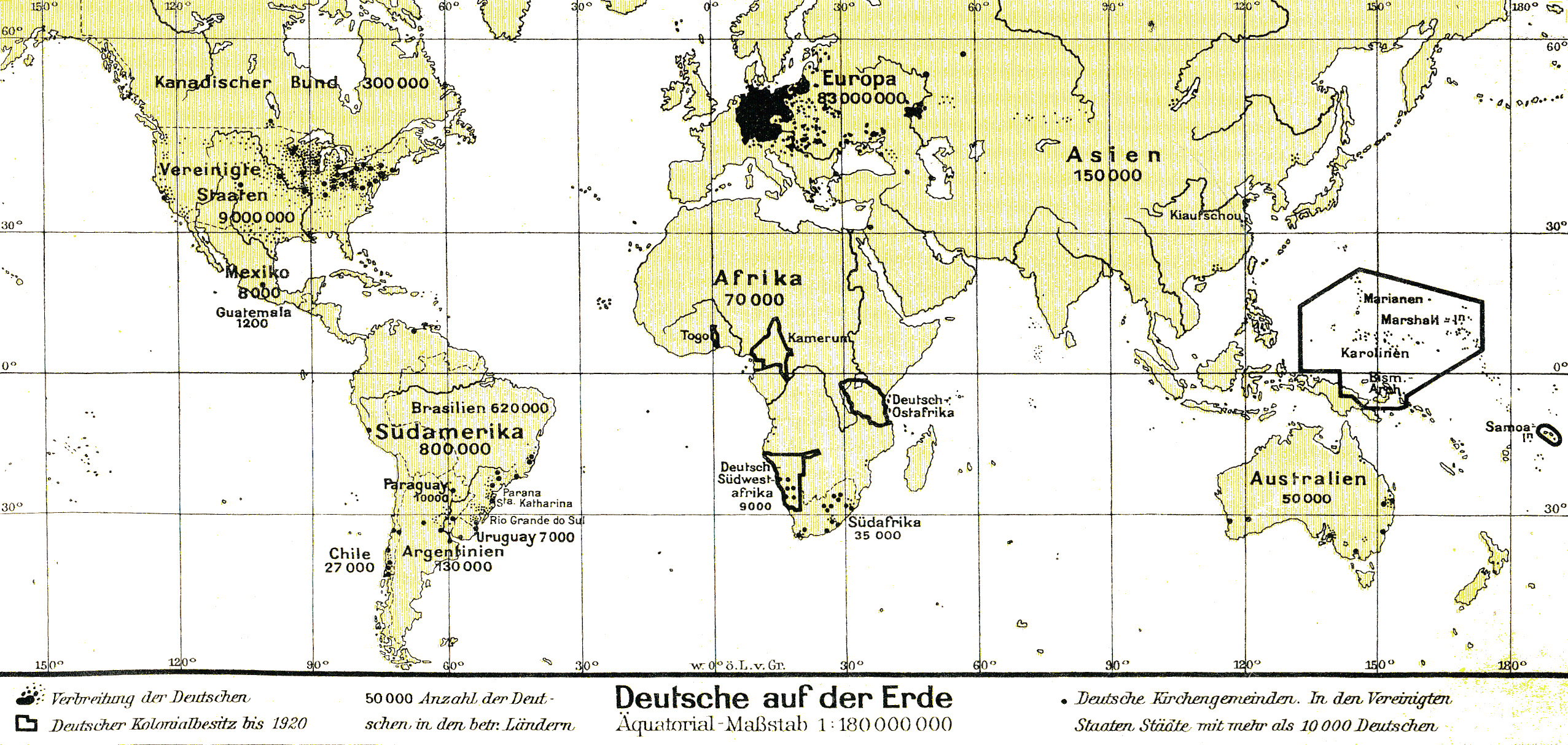
What is Germany? Who is German?
-
Opened: Wednesday, August 26, 2026, 12:00 AMDue: Wednesday, September 2, 2026, 12:00 AM
Introductory Writing Assignment
To start off the semester, I would like you to compose a brief text introducing yourself. Feel free to write as much as you would like, but it must be at least one page (roughly 300 words). Please address most if not all of the questions below in paragraph form. Do not worry about structure or grammar. Feel free to use spell check, but please do not use Grammarly. Please either submit it on Moodle or email it to me at bvanzee@brynmawr.edu before 11:59pm on Monday, 1 September 2026.
Please include the following pieces of information:
- Your name
- How you like to be addressed (nicknamed, pronouns, etc.)
- Where you are from
- Possible major(s) and minor(s) at Bryn Mawr
- What do you think are your strengths as a writer?
- What are some areas where you think you may need to improve?
- What challenges have you encountered in previous classes you have taken and how have you managed them?
- What particular structures or practices best support or hinder your learning?
- What brought you to this Emily Balch Seminar in particular and what do you hope to get out of it?
- What would you like me to know about you?
-
Use these questions to guide your readings of Hoyer and Blackbourn.
111.8 KB · Uploaded 08/26/26, 13:17 -
Katja Hoyer, “Introduction,” Blood and Iron (2022), pp. 7-12.
7.3 MB · Uploaded 08/26/26, 13:04 -
David Blackbourn, “On the Move,” Germany in the World (2023), pp. 252-72, 296-309.
Note that I have provided the entire chapter and you only need to read the pages indicated above.
29.9 MB · Uploaded 08/26/26, 13:05
-
-
-
-
*READ THE INSTRUCTIONS I HAVE POSTED BEFORE YOU BEGIN READING*
-
See these instructions and discussion questions for a small assignment.
74.0 KB · Uploaded 08/29/26, 18:19 -
Gordon Harvey, Writing with Sources (2017), 1-16.
18.7 MB · Uploaded 08/28/26, 18:52 -
PRINT OUT CHAPTER ONE AND ANNOTATE IT. See "Discussion Questions" document above for instructions on the annotation exercise.
Tara Zahra, “Travel Agents on Trial,” The Great Departure (2016), pp. 23-55.
NOTE: I have included the introduction to the book as well as the chapter "Travel Agents on Trial." Only pages 23-55 are required.
26.4 MB · Uploaded 08/28/26, 19:16 -
Follow these steps to analyze the primary source from von Weber.
122.5 KB · Uploaded 08/28/26, 19:19 -
Is this a primary source or a secondary source? How many authors are in this text?
Use the primary source analysis guide to analyze this source.
86.6 KB · Uploaded 08/28/26, 19:25
-
-
-
-
-
-
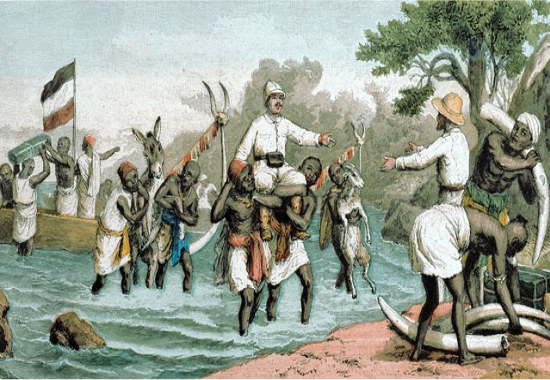
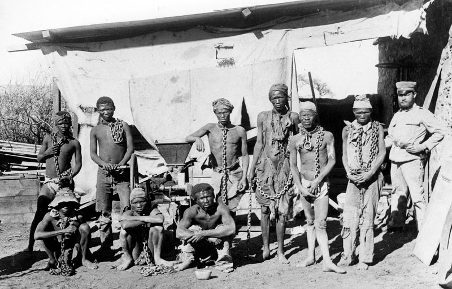
Overview of Readings for Tues., 8 September
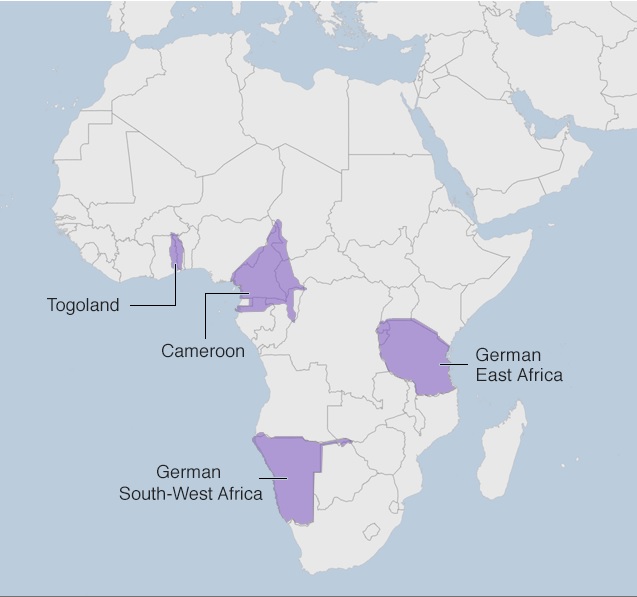
- Michell Moyd, “German Empire,” Encyclopedia of Colonialism (2003): 230-233. [brief overview of German colonial history]
- David Blackbourn, “On the Move,” Germany in the World (2023), pp. 272–96.
- Guide to Analzying a Primary Source
- Primary Source#1 Friedrich Fabri, “Does Germany Need Colonies?” (1879)
- Primary Sources#2: Richard Bell, Carl Becker, and Lene Haase
- Primary Sources#3 German Women and the Colonial Enterprise, 332-338.
-
This brief 2-page encyclopedia entry provides a brief overview of the where, what, when, and where of the German Colonial Empire and its demise. It's useful to read this overview before diving into Blackbourn.
9.5 MB · Uploaded 09/3/26, 16:59 -
David Blackbourn, Germany in the World: A Global History, 1500-2000 (New York: W.W. Norton, 2023), pp. 272-96.
Note that this is just a shortened version of the David Blackbourn chapter I already provided you with to read for your first day of class. You can use that as well. I have included this one for ease of access.
Carefully read the David Blackbourn text for the context you will need to successfully analyze and interpret the primary sources.
17.0 MB · Uploaded 09/3/26, 16:57 -
Use this guide for analyzing primary sources and drawing out deeper meaning. See also under the "Resources" tab in Moodle where I have posted additional guides to primary source analysis.
122.5 KB · Uploaded 09/3/26, 17:01 -
**Read the analyzing primary sources guide I provided**
Primary Source #: Friedrich Fabri, “Does Germany Need Colonies? (1879),” in German History in Documents and Images: https://ghdi.ghi-dc.org/sub_document.cfm?document_id=1867
92.8 KB · Uploaded 09/3/26, 16:40 -
I have provided context within the PDF
121.6 KB · Uploaded 09/3/26, 16:49 -
Carefully read the following sources on German women in Southwest Africa. What can they tell us about German colonialism, migration, and national identity during the era of high imperialism?
Document Set 114: German Women in the Colonies, Lives and Voices: Sources in European Women's History (2001), 332-338.
5.1 MB · Uploaded 09/3/26, 16:48
-
-
-
-
Krista Molly O’Donnell, “The first Besatzungskinder: Afro-German Children, Colonial Childrearing Practices, and Racial Politics in German Southwest Africa, 1890-1914,” Not So Plain as Black and White (2005) 61-78.
649.4 KB · Uploaded 09/3/26, 17:29 -
Nancy Reagin, Chapter 2 “Domesticity and German National Character,” Sweeping the Nation: Domesticity and National Identity in Germany, 1870-1945 (2007), 49-71.
377.1 KB · Uploaded 09/3/26, 17:34 -
Opened: Thursday, September 3, 2026, 12:00 AM
Please submit a docx or a Google Docs link, so that I can easily annotate or leave comments if necessary. I really do not enjoy reading it in the Moodle text boxes. Thank you!
Writing Exercise Due 11 September, by 11:59pm
Based on the background context of the secondary readings and the primary sources for Week 2, I’d like you to compose a brief 1-2 page (between 300-500 words) piece of writing in which you analyze one (or more) sources provided.
Please refer to the handout I have also posted on steps for analyzing primary sources. If you feel experienced in these steps already, I suggest you jump to the steps in the second half of the document, which even professional historians have to remind themselves of sometimes. You may want to do a quick read over all of the sources, and then settle on one or a couple you would like to read much more thoroughly. Your writing should not comprehensively address all parts of a given source but instead focus on one theme or aspect of it. Draw on the contexts from the secondary sources to analyze the source, going beyond summarizing to tease out a layer of deeper meaning and significance. F For more detail on these writing exercises, please consult the syllabus. You can email me with any questions or concerns. I’m looking forward to reading your papers! Submit it under the Assignment tab I have included under the readings for Thursday. Please send it as a docx or as a Google Docs link, so I can more easily provide comments (I don’t enjoy reading in Moodle text boxes).
This 1-2 pages of writing can take multiple forms.
- It can be a version of “free-writing” where you brainstorm your way through the sources and what they mean. This means you can hand in raw, unedited train-of-thought writing. I want to encourage more of you to use writing as a tool for thinking and brainstorming and not just for producing carefully formulated prose the consumption of a reading public (i.e. me).
- However, I understand not everyone wants that right now, so the exercise can also take the form of a formal argument where you make a claim about the meaning of the sources that is both not obvious and not explicitly stated. Whatever you choose, please include a note explaining to me what type of writing you intended.
Please do not fret too much over this assignment or spend too much time on it (max 2.5 hours! But 1 hour should be sufficient). It is one of the many more casual writing parts of the course that will help develop your skills for the formal papers. The paper will be a diagnostic for me, allowing me to begin to get to know your writing and voice. As a reminder, these writing exercises are graded for effort and engagement on a check, check-plus, check-minus, etc. scale.
-
-
-
-
-
-
-
4.1 MB · Uploaded 09/7/26, 13:53
-
Primary Source: Theodor Michael, Black German (2017), pp. 14-29.
267.3 KB · Uploaded 09/7/26, 13:55 -
Document on Bernhard Epassi, Cameroonian in Berlin: https://blackcentraleurope.com/sources/1850-1914/cameroon-in-berlin-and-german-letters-from-cameroon-1897/
-
-
-
-
This session, we will be meeting in Canaday Library, Room 315 with Jennifer Stoval for an introduction to library research. Please show up a few minutes early, so that we can start on time.
-
36.2 MB · Uploaded 09/8/26, 14:39
-
Gordon Harvey, Chapter 2, Writing with Sources (2017), 17-36.
20.7 MB · Uploaded 09/8/26, 14:36
-
-
-