
HISTB319 Refugees and Modern Europe
Section outline
-
-
-
Tuesdays and Thursdays 2-6pm, and by appointment (email me)
If my normal office hours do not work with your schedule, email me and we can arrange a separate time.
Located in Old Library Room 205
-
-
-
This is a master list of all of the reference works listed below and many others. Use this list of encyclopedias and handbooks to conduct your early research when developing your topics of interest. This is a running list that I will update regularly.
Last updated 9 September 2026
-
Yen Le Espiritu (ed.), The Sage Encyclopedia of Refugee Studies (2025), https://tripod.brynmawr.edu/permalink/01TRI_INST/54st2k/alma991019665106204921
Start with the list of entries and the reader’s guide, link
-
Elena Fiddian-Qasmiyeh, Gil Loescher, Katy Long, Nando Signona (eds.), The Oxford Handbook of Refugees and Forced Migration Studies (Oxford: Oxford University Press, 2014), https://tripod.brynmawr.edu/permalink/01TRI_INST/54st2k/alma991019410418204921
-
Klaus Bade and Corrie van Eijl (eds.), The Encyclopedia of Migration and Minorities in Europe: From the Seventeenth Century to the Present (Cambridge: Cambridge University Press, 2011), https://tripod.brynmawr.edu/permalink/01TRI_INST/sf0r01/alma991018851719804921
-
Immanuel Ness, The Encyclopedia of Global Human Migration (Wiley-Blackwell, 2013), https://tripod.brynmawr.edu/permalink/01TRI_INST/54st2k/alma991018929990704921
-
Anna Triandafyllidou, (ed.), Routledge Handbook of Immigration and Refugee Studies (London: Taylor & Francis, 2022), https://tripod.brynmawr.edu/permalink/01TRI_INST/1lknpdq/cdi_informaworld_taylorfrancisbooks_9781003194316
-
-
-
Opened: Monday, September 7, 2026, 12:00 AMDue: Friday, October 2, 2026, 11:59 PM
Since one of the goals of this course is to improve your ability to research, synthesize, and evaluate large quantities of scholarship, you are required to select an academic monograph (either one of your choosing or from a list I provide) and write a book review WITHOUT actually reading the book cover to cover. Instead, you will locate three to five scholarly reviews, carefully read the introduction and conclusion, skim the main chapters, and compose a synthesis as if you had read the whole book. You may not read the book in full! We will discuss and practice the art of skimming. Your book review should be roughly three to four pages, double-spaced, 12-point font, with 1-inch margins. It should (1) synthesize the book’s main argument, the question it addresses, the scholarly discussion it is part of, and the methodology it employs, and (1) offer a critical assessment of it. Additional guidance on book reviews will be posted to Moodle. This exercise builds your ability to quickly identify, synthesize, and evaluate academic arguments and scholarship, which will serve you well on the research project.
Due Friday, October 2nd by 11:59pm (Week 5)
-
-
-
Opened: Wednesday, August 26, 2026, 12:00 AMDue: Wednesday, September 2, 2026, 12:00 AM
Please take a few minutes to fill out this survey before our first class session. It will help me get to know you and begin tailoring my teaching to your interests and needs. Your responses will not be shared with anyone.
Please include the following pieces of information:
• Your name:
• How you would like to be addressed (nickname, pronouns, etc.)
• Where are you from?
• Your major(s) and minor(s) or those you are considering if you have yet to declare:
• What challenges have you encountered in previous classes you have taken and how have you managed them?
• What brought you to this class and what do you hope to get out of it?
• What particular structures or practices best support or hinder your learning?
• If I notice a change for the worse in your engagement over the course of the semester, what would be most useful for me to do?
• What would you like me to know about you?
-
Read these instructions, consider the questions, and identify one or two terms or historical events from the readings with which you were unfamiliar, look them up, and come to class prepared to explain it/them to one or two of your classmates.
150.9 KB · Uploaded 08/26/26, 18:49 -
Matthew Carr, “A Gated Continent,” Fortress Europe: Dispatches from a Gated Continent (2016), 11-24.
388.4 KB · Uploaded 08/26/26, 18:43 -
Astrid R. Zolberg et al., “Who is a Refugee”, Escape from Violence (1989), 3-33.
3.8 MB · Uploaded 08/26/26, 18:44 -
Peter Gatrell, The Making of the Modern Refugee (2013), 1-13.
1.2 MB · Uploaded 08/26/26, 18:45 -
Jérôme Elie, “Histories of Refugee and Forced Migration Studies,” The Oxford Handbook of Refugee and Forced Migration Studies (2014), 23-32.
1.3 MB · Uploaded 08/26/26, 18:46 -
This document is for us to crowd-source notes we take during class to track our discussion and open questions. I ask everyone to contribute if possible.
-
-
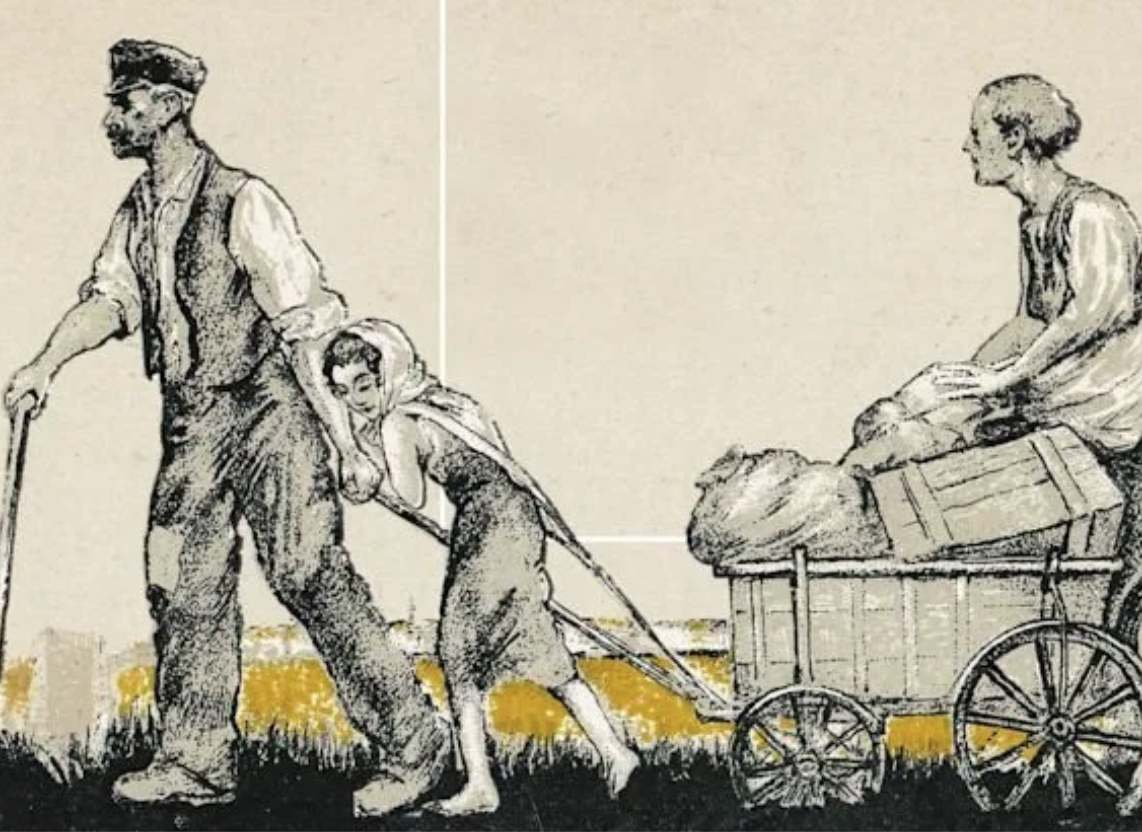
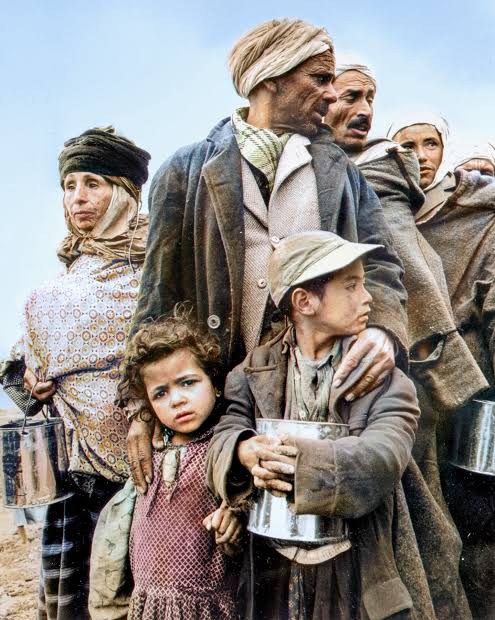
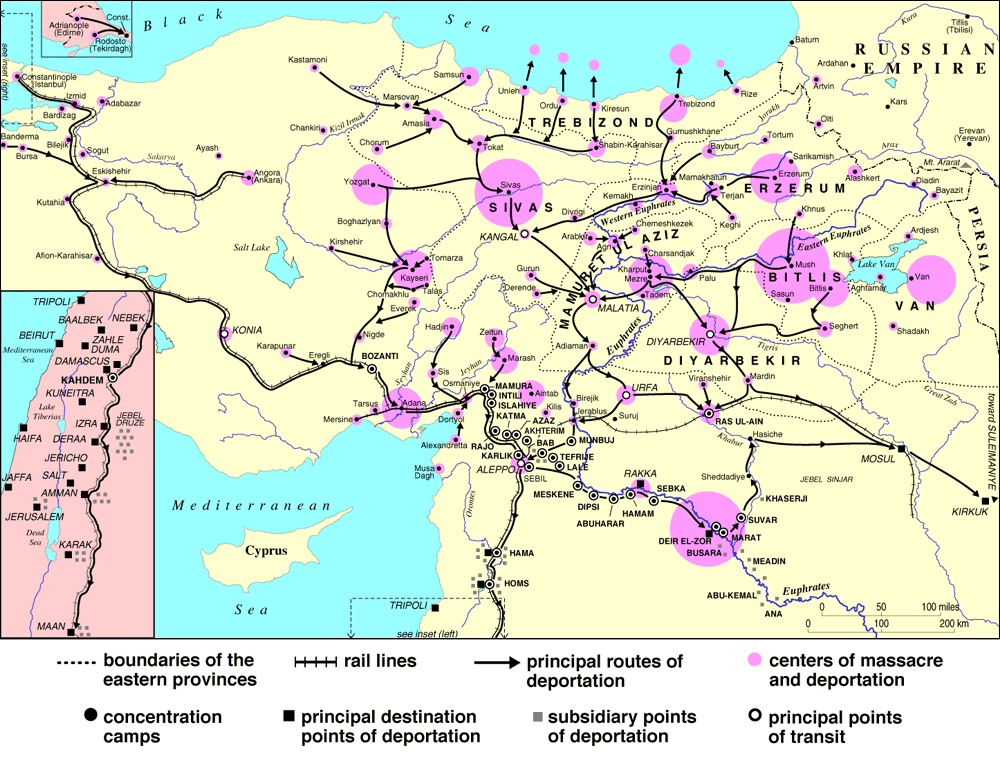
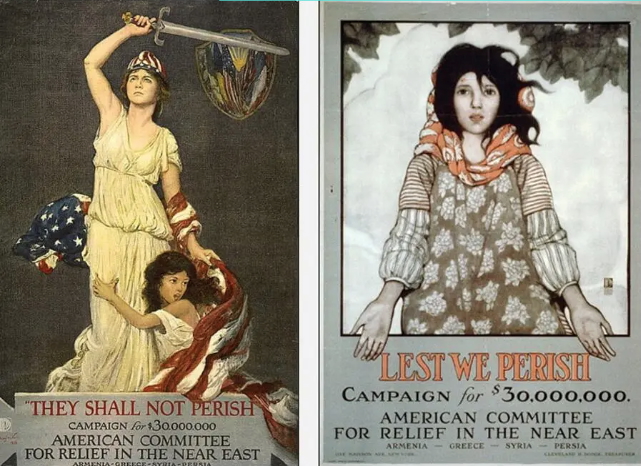
Week 2 (9 September 2026) | The Armenian Genocide: Refugees, Humanitarians, and the “Mobilization of Suffering”
Key questions:
Why do we see and feel some people's suffering and turn a blind eye to others? When and why do we feel moved to help some people and not others?
MAP OF ARMENIAN GENOCIDE IN OTTOMAN EMPIRE (1915)
-
PBS Documentary: The Armenian Genocide(Two Cats Productions, 2006) [60 min] [Course Reserve in Canaday Library]
[Trigger warning: experiences of rape and sexual assault are recounted in minutes 28-30 of the film]
You can now stream the film at your leisure in your preferred viewing venue. Canaday librarians have digitized the film for us and made it available to stream; here is the link:
For the unlikely event you would prefer to watch it on DVD, it will remain on course reserve in Canaday Library.
The point of this documentary is to give you a working understanding of what the Armenian Genocide was, and the circumstances under which it took place.
Questions to Answer:
(1) What were the conditions that led to the Armenian genocide (enumerate the factors you think were important)?
(2) What types of sources are used as evidence?
(3) What led to the forgetting of the Armenian Genocide?
Let me know if you have any questions.
-
Paul Slovic, “‘If I Look at the Mass I will Never Act’: Psychic Numbing and Genocide,” Judgement and Decision Making, 2, No. 2 (2007): 79-95.
[Read carefully]
448.4 KB · Uploaded 09/2/26, 16:55 -
Heide Fehrenbach and David Rodogno, “A Horrific Photo of a Drowned Syrian Child”: Humanitarian Photography and NGO Media Strategies in Historical Perspective,” International Review of the Red Cross 97, no. 900 (2015): 1121-1155.
[Read carefully]
2.9 MB · Uploaded 09/2/26, 16:57 -
Leshu Torchin, “Ravished Armenia: Visual Media, Humanitarian Advocacy, and the Formation of Witnessing Publics,” American Anthropologist 108, no. 1 (2006): 214-219.
[read carefully]
1.9 MB · Uploaded 09/4/26, 18:53 -
Margaret Anderson, “‘Down in Turkey, Far Away’: Human Rights, the Armenian Massacres, and Orientalism in Wilhelmine Germany,” The Journal of Modern History 79, No. 1 (2007): 80-111.
[Read for her argument; you do not need to read as carefully as the other pieces; focus on main point and the examples she uses to support it.]
496.8 KB · Uploaded 09/2/26, 17:02 -
Maud S. Mandel, Chapter 2: "Orphans of the Nation: Armenian Refugees in France," In the Aftermath of Genocide: Armenians and Jews in Twentieth-Century France (2003): 19-51.
[Read for details and main points but do not have to read as closes as the first several articles; compare with Anderson]
250.8 KB · Uploaded 09/2/26, 17:06 -
-
Optional Background: Hilmar Kaiser, “Genocide at the Twilight of the Ottoman Empire”, Handbook of Genocide Studies (2016), 365-85.
This optional text provides a brief, clear overview of the Armenian Genocide. If you are unable to view the film or would prefer to read a text, you can read this instead for all the necessary background. It includes additional detail and information not in the film.
368.9 KB · Uploaded 09/2/26, 17:11
-
-
This session, we will be meeting in Canaday Library, Room 315 with Jennifer Stoval for an introduction to library research. Please show up a few minutes early, so that we can start on time.
As for the topics I’ve asked you to identify and bring to discuss and research this week: these need not become your final project topic. It would save time if one of them did, but I expect most of you will only settle on a final topic after spending much more time researching. I’ve asked you to choose topics for this week because practicing research skills is easiest with a concrete topic already in hand. And once you’ve learned the process for one topic, you can repeat it for any topic that interests you later. Topic development, in fact, tends to be circular and iterative: you research one topic, discover a second, more compelling one partway through, and abandon the first for the new one. So although you could, in principle, choose a topic and carry it through to the final paper, I’d rather you explore several and not hesitate to start over.
The point of the next several weeks is to explore different topics, with the understanding that you’ll eventually settle on one for the final project. You’re free to change direction at any point up until you submit your list of books and articles in week 6 (October 7). Ideally, you'll decide by the end of week 4, leaving a few weeks to research that specific topic—but you're also welcome to keep researching multiple topics right up to the week 6 deadline.
-
Thomas Mann, Oxford Guide to Library Research (2015), 1-16. [this provides key background for library research methods we'll discuss and practice in Week 3]
232.8 KB · Uploaded 09/8/26, 17:54 -
Philip Ther, "The Two Faces of Nationalism: Ethnic Cleansing and National Solidarity," The Outsiders: Refugees in Europe (2019), 54-78.
2.6 MB · Uploaded 09/8/26, 17:51 -
Tara Zahra, Chapter 1: "The Quintessential Victims of War," The Lost Children: The Reconstruction of Europe’s Families after World War II (Cambridge, MA: Harvard University Press, 2011), 24-58.
800.4 KB · Uploaded 09/8/26, 17:53
-
-
Opener: Nomah
Facilitator: Lauren
Closer: Lilly
Google Doc Link for Opening and Closing https://docs.google.com/document/d/1HvIuiTwzj0cJKetvrpXNtSpo1X1euoFvwKebJNTqwjQ/edit?usp=sharing