
1) Consent stood out the most to me. In the modern world with new surveillance, our images and information are generally everywhere without our consent. Security cameras, or simply being in the background of someone's photo or video are big things that come to mind. Though there is a higher percent of involuntary surveillance, one thing that came to mind was the move "Project Hail Mary." It features an alien as a main character, and the alien species watches others sleep due to their inability to wake up from external stimuli when asleep, rendering them defenseless. The human and alien characters in this film participate in a voluntary/consensual form of surveillance, purely formed off of the basis of safety.
2) One of the things that stood out to me from Lavater's arguments was how humans will inherently use physiognomy to make judgements on things, whether they be people, objects, or animals. Lavater argues that "No food, not a glass of wine, or beer, not a cup of coffee, or tea, comes to table, which is not judged by its physiognomy, its exterior; and of which we do not thence deduce some conclusion respecting its interior, good, or bad, properties." Humans inherently make judgements on things (those these judgements may be incorrect) which help us to form a base understanding of the world around us.
3) 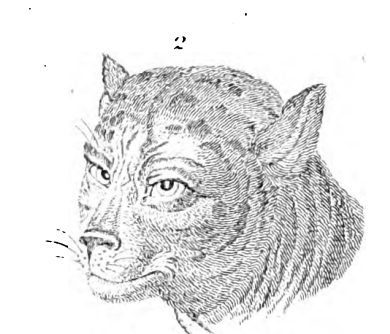 (pdf pg. 416)
This image is from the section titled "Observations on Some Animals." According to the description, this image is of a tiger. It has a rather human-like face and exceedingly pointed ears. The distinctive tiger stripes are not prominent in this depiction. Lavater claimed that "when seen in profile, [the tiger] approaches much nearer the human form."