1) I think the timing coordinate is the one that stood out the most to me. It reminded me of a book I read called Yesteryear, where the main character is living her life in accordance with what she believes her followers want to see, even when she is not filming. This idea of an omnipresent figure dictating her every move that is solely in her head was very interesting to me.
2) What I found most striking is the slight similarity between physiognomy and reading facial expressions. Though physiognomy is a pseudoscience studded with racist ideas, when Lavater said, "physiognomy is the very soul of wisdom" on page 44, I couldn't help but think about how important facial expressions and body language are for our society. Understanding Facial expressions allows a deeper insight into how a person is feeling, though not in the way physiognomy thought.
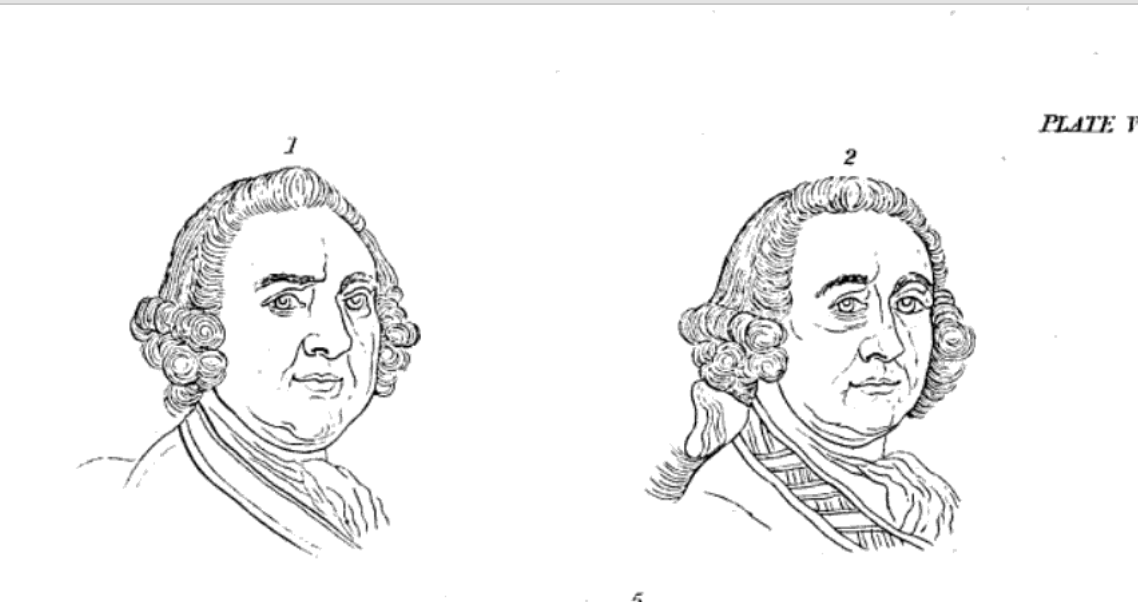
3) When reading, I found this image on page 58. What I found interesting is how Lavater analyzed the two images. He started by saying they looked similar, though figure 1's eyebrow and smaller mouth indicated he was less manly and confident. It was interesting that the smallest detail had such a impact on analyzing who the person was.