
Mortuary Archaeology - bmc.ARCH.B536.001.F26
Section outline
-
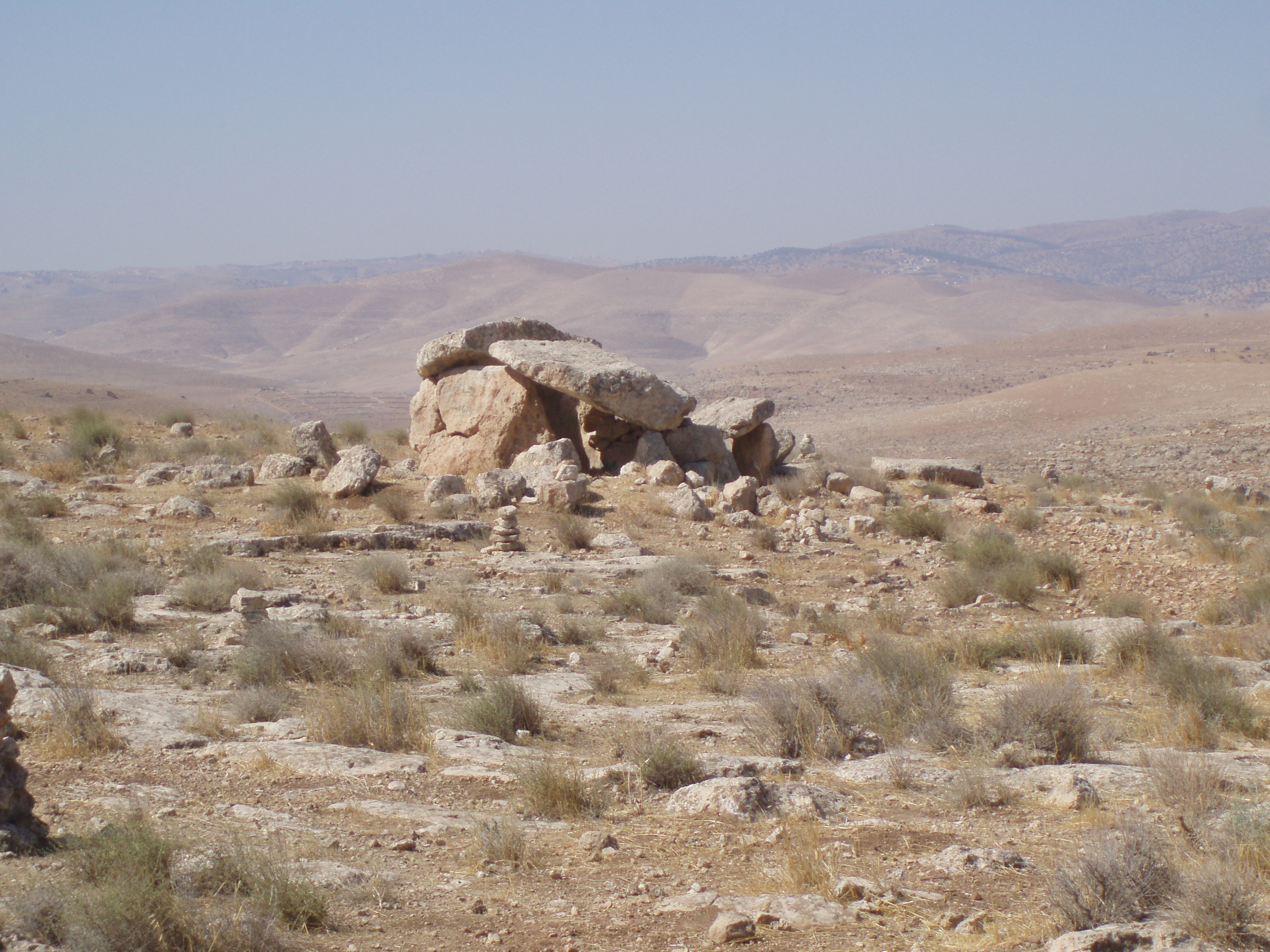 Death, although, a shared human experience provokes a huge variety of responses, from the ad hoc and hasty burial of the deceased through to elaborate and lengthy funerary rituals. One of the most direct forms of evidence we have for the people who lived thousands of years ago are their burials; vestiges of once-living people. The burial record, however, raises as many questions as it does answers. Moreover, significant debate exists around what constitutes respectful treatment of the dead. Primarily focusing on case studies from Western Asia, the eastern Mediterranean and North Africa, this upper-level undergraduate/graduate seminar will draw upon archaeological and anthropological literature to explore the different ways in which mortuary archaeology can inform us on wider socio-cultural phenomenon. We will also explore the complex and multifaceted ethical issues around studying the dead. What role do (or can) the ancient dead play in contemporary society?
 -
-
Working syllabus. We will discuss guidelines, due dates etc., during our first class together.
-
Brief questions, comments and notes should be added to the shared document by 11.59pm on the Thursday before each class. I have added in headings for each class so please add your notes below these.
-
-
-
-
Opened: Saturday, August 29, 2026, 12:00 AMDue: Friday, September 25, 2026, 11:59 PM
-
Opened: Saturday, August 29, 2026, 12:00 AMDue: Friday, October 9, 2026, 11:59 PM
-
Opened: Saturday, August 29, 2026, 12:00 AMDue: Friday, October 30, 2026, 11:59 PM
-
Opened: Saturday, August 29, 2026, 12:00 AMDue: Friday, December 18, 2026, 12:30 PM
-
-
-
-
Bradbury, J. 2025. Death and Burial within the Ancient Levant (4500-550 BCE): Challenging the Normative. Routledge. (pages 1-7)
5.3 MB · Uploaded 08/31/26, 08:36 -
Luckhurst, R., 2025. Graveyards. Princeton University Press. https://doi.org/10.1515/9780691291574-002 (pages 11-21)
1.1 MB · Uploaded 08/29/26, 13:10 -
Tarlow 2023 File PDF
Optional: Tarlow, Sarah. 2023. The Archaeology of Loss. Picador. (pages 1-13), please be aware that this chapter includes references to suicide. If you feel uncomfortable reading or discussing this, please just let me know. I include it here as it is a touching chapter, written by a mortuary archaeologist whose husband chose to commit suicide (while battling with an incurable illness). For me it touches upon some of the reasons as society we are uncomfortable to discuss death, but also why, on the other hand, it interests us.
922.0 KB · Uploaded 08/29/26, 13:17 -
-
-
-
-
Bradbury, Jennie. 2025. Death and Burial within the Ancient Levant (4500-550 BCE): Challenging the Normative. Routledge. (Chapter 2 only)
20.1 MB · Uploaded 08/31/26, 08:37 -
Giles, Melanie, and Howard Williams. 2016. “Introduction: Mortuary Archaeology in Contemporary Society.” In Archaeologists and the Dead: Mortuary Archaeology in Contemporary Society, edited by Howard Williams and Melanie Giles. Oxford University Press. https://doi.org/10.1093/oso/9780198753537.003.0007.
172.8 KB · Uploaded 08/29/26, 13:20 -
Ikram 2018 File PDF
Ikram, Salima. 2018. “An Overview of the History of the Excavation and Treatment of Ancient Human Remains in Egypt.” In Archaeological Human Remains: Legacies of Imperialism, Communism and Colonialism, edited by Barra O’Donnabhain and Maria Cecilia Lozada. Springer International Publishing. https://doi.org/10.1007/978-3-319-89984-8_4.
265.7 KB · Uploaded 08/29/26, 13:08 -
Parker Pearson, Mike. 1999. The Archaeology of Death and Burial. A & M University Press. (Chapter 2 only)
16.4 MB · Uploaded 09/4/26, 16:21 -
Perry 2012 File PDF
Perry, Megan A. 2012. “Paleopathology in Lebanon, Syria, and Jordan.” In The Global History of Paleopathology. Pioneers and Prospects, edited by Jane E. Buikstra and Charlotte Roberts. Oxford University Press.
1.4 MB · Uploaded 08/29/26, 13:05 -
Stutz, Liv Nilsson, and Sarah Tarlow. 2013. “Beautiful Things and Bones of Desire: Emerging Issues in the Archaeology of Death and Burial.” In The Oxford Handbook of the Archaeology of Death and Burial, edited by Liv Nilsson Stutz and Sarah Tarlow. Oxford University Press. https://doi.org/10.1093/oxfordhb/9780199569069.013.0001.
1.3 MB · Uploaded 08/29/26, 13:06 -
-
-
-
-
-
Agarwal, Sabrina C. 2026. “The Future of Human Remains Collections: Moving Toward Ethical Treatment, Accountability, and Antiracist Practice.” Annual Review of Anthropology, ahead of print. https://doi.org/10.1146/annurev-anthro-041224-022028.
223.1 KB · Uploaded 08/29/26, 13:22 -
Bradbury, Jennie. 2025. Death and Burial within the Ancient Levant (4500-550 BCE): Challenging the Normative. Routledge. (Chapter 10 only)
10.6 MB · Uploaded 09/7/26, 13:40 -
Francis, Errol, Chloe Asker, and Victoria Tischler. 2025. “Testing Ethical Disagreement on Ancestral Human Remains in Museums.” International Journal of Cultural Property 32 (4): 355–64. Cambridge Core. https://doi.org/10.1017/S094073912610023X.
474.5 KB · Uploaded 08/29/26, 13:22 -
Gregoricka, Lesley A. 2023. “The Ethics of Excavating: Bioarchaeology and the Case for Rehabilitating Legacy Human Skeletal Collections in the Near East.” Levant 55 (3): 294–303. https://doi.org/10.1080/00758914.2023.2278287.
214.5 KB · Uploaded 08/29/26, 13:22 -
Peyroteo-Stjerna, Rita, and Mari Tõrv. 2026. “Beyond Bones: How Biomolecular Archaeology Is Challenging the Definition of Ancient Human Remains and Its Ethical Implications.” World Archaeology, 1–12. https://doi.org/10.1080/00438243.2026.2632228.
659.3 KB · Uploaded 08/29/26, 13:22 -
Stutz 2016 File PDF
Stutz, Liv Nilsson. 2016. “To Gaze Upon the Dead: The Exhibition of Human Remains as Cultural Practice and Political Process in Scandinavia and the USA.” In Archaeologists and the Dead: Mortuary Archaeology in Contemporary Society, edited by Howard Williams, Melanie Giles, Howard Williams, and Melanie Giles. Oxford University Press. https://doi.org/10.1093/oso/9780198753537.003.0021.
21.0 MB · Uploaded 08/29/26, 13:23
-
-
-
-
-
Croucher, Karina. 2017. “Keeping the Dead Close: Grief and Bereavement in the Treatment of Skulls from the Neolithic Middle East.” Mortality. https://doi.org/10.1080/13576275.2017.1319347.
1.9 MB · Uploaded 08/29/26, 15:32 -
Croucher, Karina, Lindsey Büster, Jennifer Dayes, et al. 2021. “Archaeology and Contemporary Death: Using the Past to Provoke, Challenge and Engage.” PLOS ONE 15 (12): e0244058. https://doi.org/10.1371/journal.pone.0244058.
2.4 MB · Uploaded 08/29/26, 13:24 -
Luckhurst, R., 2025. Graveyards. Princeton University Press. https://doi.org/10.1515/9780691291574-002 (pages 73-81).
870.5 KB · Uploaded 08/29/26, 13:27 -
Squires, Kirsty, Dario Piombino-Mascali, Clara Urzì, and Damien Huffer. 2026. “The Real Mummy’s Curse: Health Risks Associated with the Sale and Trade of Mummified Remains.” International Journal of Cultural Property 33: e22. Cambridge Core. https://doi.org/10.1017/S0940739126100393.
3.5 MB · Uploaded 08/29/26, 13:27 -
“‘Somebody Is Walking on Your Grave’ Is a Journey to Cemeteries across 4 Continents.” 2025. Weekend Edition Sunday (Washington, D.C.), September 27. 3255138571. Research Library. https://proxy.brynmawr.edu/login?url=https://www.proquest.com/other-sources/somebody-is-walking-on-your-grave-journey/docview/3255138571/se-2?accountid=9772.
-
Young, Craig, and Duncan Light. 2016. “Interrogating Spaces of and for the Dead as ‘Alternative Space’: Cemeteries, Corpses and Sites of Dark Tourism.” International Review of Social Research 6 (2): 61–72. https://doi.org/10.1515/irsr-2016-0009.
220.9 KB · Uploaded 08/29/26, 13:28
-
-
-
-
-
-
-
Bradbury, Jennie. 2025. Death and Burial within the Ancient Levant (4500-550 BCE): Challenging the Normative. Routledge. (Chapters 4 and 6)
25.3 MB · Uploaded 09/7/26, 13:51 -
Bradbury, Jennie. 2025. Death and Burial within the Ancient Levant (4500-550 BCE): Challenging the Normative. Routledge. (Chapters 4 and 6)
31.2 MB · Uploaded 09/7/26, 13:51 -
Bradbury, Jennie, and Graham Philip. 2020. “Mapping and Modelling the ‘Invisible Dead’: Reconstructing Demographics in the Ancient Near East.” In Studies in Honour of Tony J. Wilkinson: New Agendas in Remote Sensing and Landscape Archaeology in the Near East, edited by Dan Lawrence, Mark Altaweel, and Graham Philip. Archaeopress Archaeology.
13.4 MB · Uploaded 08/29/26, 13:29 -
Hockey, Jenny, Trish Green, Andy Clayden, and Mark Powell. 2012. “Landscapes of the Dead? Natural Burial and the Materialization of Absence.” Journal of Material Culture 17 (2): 115–32. https://doi.org/10.1177/1359183512442631
9.2 MB · Uploaded 08/29/26, 13:30 -
Kostanti, Katerina. 2017. “‘Missing Infants’: Giving Life to Aspects of Childhood in Mycenaean Greece via Intramural Burials.” In Children, Death and Burial: Archaeological Discourses, edited by Eileen Murphy and Mélie Le Roy.
1.0 MB · Uploaded 08/29/26, 13:30 -
Murphy, Amanda, and Andrew T. Chamberlain. 2017. “Looking Forward to Look Back.” In Engaging with the Dead: Exploring Changing Human Beliefs about Death, Mortality and the Human Body, edited by Jennie Bradbury and Chris Scarre. Oxbow Books.
1.3 MB · Uploaded 08/29/26, 13:32 -
Sulas, Federica, Merethe Schifter Bagge, Renée Enevold, et al. 2022. “Revealing the Invisible Dead: Integrated Bio-Geoarchaeological Profiling Exposes Human and Animal Remains in a Seemingly ‘Empty’ Viking-Age Burial.” Journal of Archaeological Science 141 (May): 105589. https://doi.org/10.1016/j.jas.2022.105589.
18.1 MB · Uploaded 08/29/26, 13:33
-
-
-
-
-
Aspock 2008 File PDF
Aspöck, Edeltraud. 2008. “What Actually Is a ‘Deviant Burial’?” In Deviant Burial in the Archaeological Record, edited by Eileen M. Murphy, vol. 2. Oxbow Books. JSTOR. http://www.jstor.org/stable/j.ctt1cd0ptg.7.
394.1 KB · Uploaded 08/29/26, 13:35 -
Bradbury, Jennie. 2025. Death and Burial within the Ancient Levant (4500-550 BCE): Challenging the Normative. Routledge. (Chapter 9)
28.4 MB · Uploaded 09/7/26, 13:56 -
Lindenlauf, Astrid. 2001. “Thrown Away Like Rubbish-Disposal of the Dead in Ancient Greece.” Papers from the Institute of Archaeology 12: 86–99.
170.0 KB · Uploaded 08/29/26, 13:35 -
Porter, Anne, Thomas L. McClellan, Susanne Wilhelm, et al. 2021. “‘Their Corpses Will Reach the Base of Heaven’: A Third-Millennium BC War Memorial in Northern Mesopotamia?” Antiquity 95 (382): 900–918. Cambridge Core. https://doi.org/10.15184/aqy.2021.58.
2.6 MB · Uploaded 08/29/26, 13:36 -
Scott, Amy B., Tracy K. Betsinger, and Anastasia Tsaliki. 2020. “Deconstructing ‘Deviant’: An Introduction to the History of Atypical Burials and the Importance of Context in the Bioarchaeological Record.” In The Odd, the Unusual, and the Strange. Bioarchaeological Explorations of Atypical Burials, 1st ed., edited by Tracy K. Betsinger, Amy B. Scott, and Anastasia Tsaliki. University Press of Florida. JSTOR. https://doi.org/10.2307/j.ctvx06wvr.
539.6 KB · Uploaded 08/29/26, 13:36 -
Weiss-Krejci, E. 2013. “The Unburied Dead.” In The Oxford Handbook of the Archaeology of Death & Burial, edited by S. Tarlow and L. Nilsson Stutz. Oxford University Press.
353.2 KB · Uploaded 08/29/26, 13:37
-
-
-
-
-
-
-
Bradbury, Jennie. 2025. Death and Burial within the Ancient Levant (4500-550 BCE): Challenging the Normative. Routledge. (Chapter 7)
36.8 MB · Uploaded 09/7/26, 15:01 -
Cradic 2021 File PDF
Cradic, Melissa S. 2021. “Materializing the Ancestors: Sacred Body Parts and Fragments in the Ancient Near East.” In The Sacred Body, edited by Nicola Laneri, vol. 1. Materializing the Divine through Human Remains in Antiquity. Oxbow Books. JSTOR. https://doi.org/10.2307/j.ctv13nb8wc.9.
3.5 MB · Uploaded 08/29/26, 13:37 -
Chesson, Meredith, S. 2023. “Early Bronze Age IA Mortuary Practices and Difference on the South-Eastern Dead Sea Plain, Jordan.” Levant 55 (1): 61–77. https://doi.org/10.1080/00758914.2022.2151265.
3.6 MB · Uploaded 08/29/26, 13:37 -
Kletter, Raz, and Yosi Levy. 2015. “And Death Shall Do Us No Part: Simultaneous Burials in Middle Bronze Age Southern Levant.” Ägypten Und Levante/Egypt and the Levant 25: 275–94.
1.9 MB · Uploaded 08/29/26, 13:38 -
Mickelburgh, Hayley L. 2018. “Actualistic Experimental Taphonomy of Inhumation Burial.” In Multidisciplinary Approaches to Forensic Archaeology. Topics Discussed during the European Meetings on Forensic Archaeology (EMFA), edited by Pier Matteo Barone and W. J. Mike Groen. Soil Forensics. Springer.
12.2 MB · Uploaded 08/29/26, 13:38 -
Mui 2019 File PDF
Mui, Sian. 2019. “Grave Expectations: Burial Posture in Popular and Museum Representations.” In The Public Archaeology of Death, edited by Howard Williams, Benedict Wills-Eve, and Jennifer Osborne. Equinox.
6.8 MB · Uploaded 09/7/26, 14:59
-
-
-
-
-
Amir, Ayala, Yuval Gadot, Jordan Weitzel, et al. 2021. “Heated Beeswax Usage in Mortuary Practices: The Case of Ḥorvat Tevet (Jezreel Valley, Israel) ca. 1000 BCE.” Journal of Archaeological Science: Reports 36: 102904. https://doi.org/10.1016/j.jasrep.2021.102904.
6.4 MB · Uploaded 08/29/26, 13:54 -
Bradbury, Jennie. 2025. Death and Burial within the Ancient Levant (4500-550 BCE): Challenging the Normative. Routledge. (Chapter 5)
19.6 MB · Uploaded 09/7/26, 15:05 -
Felli 2017 File PDF
Felli, Candida. 2017. “Protracted Burial Practices and Cremation in the Ancient Near East: Two Independent Phenomena?” In Engaging with the Dead: Exploring Changing Human Beliefs about Death, Mortality and the Human Body, edited by Jennie Bradbury and Chris Scarre. Oxbow Books.
1.0 MB · Uploaded 08/29/26, 13:54 -
Grzegorska, Aleksandra. 2020. “Cremation in Southern Levant and Lebanon: Review of Literature.” Bioarchaeology of the Near East 14: 61–92.
296.9 KB · Uploaded 08/29/26, 13:59 -
Kreppner, Florian Janoscha. 2014. “The New Primary Cremation Custom of Iron Age Tell Sheikh Hamad/Dūr-Katlimmu (North-Eastern Syria).” In Contextualising Grave Inventories in the Ancient Near East. Proceedings of a Workshop at the London 7th ICAANE in April 2010 and an International Symposium in Tübingen in November 2010, Both Organised by the Tübingen Post-Graduate School “Symbols of the Dead,” edited by Peter Pfälzner, Herbert Niehr, Ernst Pernicka, Sarah Lange, and Tina Köster. Harrassowitz Verlag.
7.8 MB · Uploaded 08/29/26, 13:55 -
Quinn, Colin P., Lynne Goldstein, Gabriel Cooney, and Ian Kuijt. 2014. “Perspectives—Complexities of Terminologies and Intellectual Frameworks in Cremation Studies.” In Transformation by Fire: The Archaeology of Cremation in Cultural Context, edited by Ian Kuijt, Colin P. Quinn, and Gabriel Cooney. Amerind Studies in Anthropology. The University of Arizona Press.
101.4 KB · Uploaded 08/29/26, 14:03
-
-
-
-
-
-
-
Baker, Jill. 2012. The Funeral Kit: Mortuary Practices in the Archaeological Record. Left Coast Press. (pages 26 (bottom of page) -56 from Chapter 2)
336.3 KB · Uploaded 08/29/26, 14:03 -
Baker, Jill. 2012. The Funeral Kit: Mortuary Practices in the Archaeological Record. Left Coast Press. (Chapter 3)
418.1 KB · Uploaded 08/29/26, 14:03 -
Bradbury, Jennie. 2025. Death and Burial within the Ancient Levant (4500-550 BCE): Challenging the Normative. Routledge. (Chapter 8)
27.1 MB · Uploaded 09/7/26, 15:07 -
Ekengren, F. 2013. “Contextualizing Grave Goods. Theoretical Perspectives and Methodological Implications.” In The Oxford Handbook of the Archaeology of Death & Burial, edited by S. Tarlow and L. Nilsson Stutz. Oxford University Press.
241.6 KB · Uploaded 08/29/26, 14:04 -
Gansell, Amy Rebecca. 2018. “Dressing the Neo-Assyrian Queen in Identity and Ideology: Elements and Ensembles from the Royal Tombs at Nimrud.” American Journal of Archaeology 122 (1): 65–100. https://doi.org/10.3764/aja.122.1.0065.
4.9 MB · Uploaded 08/29/26, 14:04 -
Wengrow, David, Brenna Hassett, Haluk Sağlamtimur, et al. 2025. “Inequality at the Dawn of the Bronze Age: The Case of Başur Höyük, a ‘Royal’ Cemetery at the Margins of the Mesopotamian World.” Cambridge Archaeological Journal 34 (2): 293–304. Cambridge Core. https://doi.org/10.1017/S0959774324000398.
1.2 MB · Uploaded 08/29/26, 14:04
-
-
-
-
-
Dixon 2018 File PDF
Dixon, Helen. 2018. “Late 1st-Millennium B.C.E. Levantine Dog Burials as an Extension of Human Mortuary Behavior.” Bulletin of the American Schools of Oriental Research 379: 19–41. https://doi.org/10.5615/bullamerschoorie.379.0019.
2.9 MB · Uploaded 08/29/26, 14:09 -
Schwartz, Glenn M. 2013. “Memory and Its Demolition: Ancestors, Animals and Sacrifice at Umm El-Marra, Syria.” Cambridge Archaeological Journal 23 (3): 495–522. Cambridge Core. https://doi.org/10.1017/S0959774313000504.
1.8 MB · Uploaded 08/29/26, 14:06 -
Schwartz, Glenn M. 2017. “The Archaeological Study of Sacrifice.” Annual Review of Anthropology 46: 223–40.
283.6 KB · Uploaded 08/29/26, 14:05 -
Weber 2014 File PDF
Weber, Jill. 2014. “Skeletons and Scent: The Importance of Odor in Death Rituals at Tell Majnuna, Syria, in the Early Fourth Millennium BC.” In Contextualising Grave Inventories in the Ancient Near East. Proceedings of the Second and Third International Symposium of the Tübingen Post-Graduate School “Symbols of the Dead” at the London 7ICAANE in April 2009 and in Tübingen in November 2010, edited by Peter Pfläzner, Herbert Niehr, Ernst Pernicka, Sarah Lange, and Tina Köster, vol. 3. Harrassowitz Verlag.
1.7 MB · Uploaded 08/29/26, 14:06 -
Wygnańska, Zuzanna. 2017. “Equid and Dog Burials in the Ritual Landscape of Bronze Age Syria and Mesopotamia.” ARAM 1–2: 141–60.
7.0 MB · Uploaded 08/29/26, 14:07 -
Short, collated sections on the Tophet phenomenon (posted on Moodle) sections from:
- Quinn, Josephine Crawley. 2018. In Search of the Phoenicians. Princeton University Press. https://doi.org/10.1515/9781400889112.
- Schwartz, J. H., F. D. Houghton, L. Bondioli, and R. Macchiarelli. 2017. “Two Tales of One City: Data, Inference and Carthaginian Infant Sacrifice.” Antiquity 91 (356): 442–54. Cambridge Core. https://doi.org/10.15184/aqy.2016.270.
- Smith, Patricia, Lawrence E. Stager, Joseph A. Greene, and Gal Avishai. 2013. “Cemetery or Sacrifice? Infant Burials at the Carthage Tophet: Age Estimations Attest to Infant Sacrifice at the Carthage Tophet.” Antiquity 87 (338): 1191–99. Cambridge Core. https://doi.org/10.1017/S0003598X00049954.
- Xella, Paolo. 2012. “‘Tophet’ An Overall Interpretation.” Studi Epigrafici e Linguistici 29–30: 259–81.
-
-
-
-
-
-
-
Katz 2025 File PDF
Katz, Dina. 2025. “The Mesopotamians’ Perception of Death in Metaphor.” In Death Imagined, edited by Karolina Sekita and Katherine E. Southwood. Ancient Perceptions of Death and Dying. Liverpool University Press. JSTOR. https://doi.org/10.2307/jj.36233612.8.
1011.6 KB · Uploaded 08/29/26, 14:16 -
Lange 2012 File PDF
Lange, Sarah. 2012. “Food and Libation Offerings for the Royal Dead in Ugarit.” In (Re-)Constructing Funerary Rituals in the Ancient Near East. Proceedings of the First International Symposium of the Tübingen Post-Graduate School “Symbols of the Dead” in May 2009, edited by Peter Pfälzner, Herbert Niehr, Ernst Pernicka, and Anne Wissing. Harrassowitz Verlag.
2.3 MB · Uploaded 08/29/26, 14:17 -
Lucarelli, Rita. 2025. “The Perception of the Human Body in the Ancient Egyptian Funerary Literature and the Book of the Dead.” In Death Imagined, edited by Karolina Sekita and Katherine E. Southwood. Ancient Perceptions of Death and Dying. Liverpool University Press. JSTOR. https://doi.org/10.2307/jj.36233612.9.
803.8 KB · Uploaded 08/29/26, 14:17 -
Pfälzner, Peter. 2016. “Royal Corpses, Royal Ancestors and the Living: The Transformation of the Dead in Ancient Syria.” In How to Cope with Death: Mourning and Funerary Practices in the Ancient Near East. Proceedings of the International Workshop Firenze, 5th - 6th December 2013, edited by Candida Felli. Edizioni ETS.
5.1 MB · Uploaded 08/29/26, 14:18 -
Ristvet, Lauren. Ritual, Performance, and Politics in the Ancient Near East. Cambridge University Press, 2014. (Chapter 2, pages 40-42 and 67-91)
4.3 MB · Uploaded 08/29/26, 13:03 -
Tsukimoto, A. 2010. “Peace for the Dead, or Kispu(m) Again, Orient.” Report of the Society for Near Eastern Studies in Japan XLV: 101–10.
418.0 KB · Uploaded 08/29/26, 14:18
-
-
-
-
-
Sader 2005 File PDF
Sader, Hélène. 2005. Iron Age Funerary Stelae from Lebanon. Vol. 11. Cuadernos de Arqueología Mediterránea. Edicions Bellaterra. (Chapter 1-read in detail pages 15-21, scan pages 21-88 on the description and dating of the stele and pick out 10 stelae you would like to discuss in class)
8.5 MB · Uploaded 08/19/26, 15:29 -
Struble, E. J., and V. R. Herrmann. 2009. “An Eternal Feast at Sam’al: The New Iron Age Mortuary Stele from Zincirli in Context.” Bulletin of the American Schools Of Oriental Research 356: 15–49.
7.2 MB · Uploaded 08/29/26, 14:19 -
Suriano, Matthew. 2018. A History of Death in the Hebrew Bible. Oxford University Press. https://doi.org/10.1093/oso/9780190844738.001.0001. (Chapter 3 only)
2.4 MB · Uploaded 08/29/26, 14:19 -
Tarlow 2023 File PDF
Tarlow, Sarah. 2023. “The Names of the Dead: Identity, Privacy and the Ethics of Anonymity in Exhibiting the Dead Body.” Public Archaeology 22 (1): 1–20. https://doi.org/10.1080/14655187.2023.2268384.
533.4 KB · Uploaded 08/29/26, 14:19
-
-
-